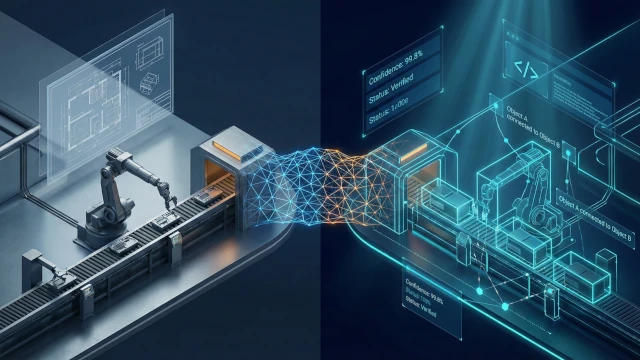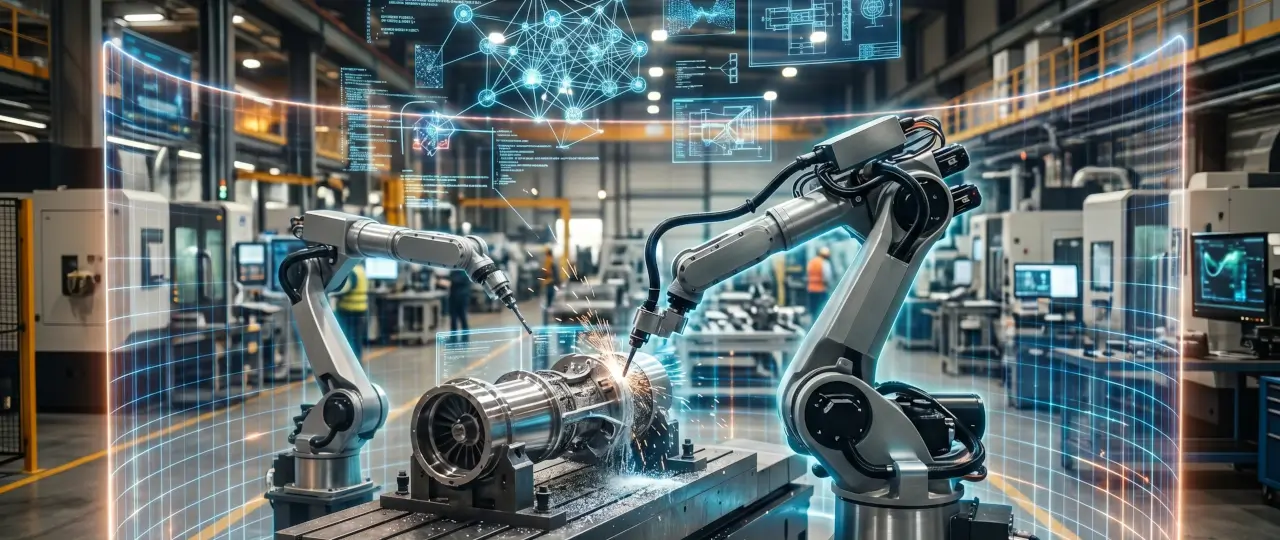
The manufacturing sector is standing at the precipice of a fundamental operational shift: the transition from static, programmed logic to dynamic, autonomous reasoning. Generative artificial intelligence promises unprecedented optimization, yet deploying these advanced algorithms within an industrial environment introduces profound engineering challenges. The factory floor is governed by strict deterministic physics, legacy communication protocols, and uncompromising safety requirements. Unlike enterprise software environments where algorithmic errors result in minor digital disruptions, hallucinations in industrial control systems can lead to catastrophic equipment failure and severe safety hazards.
Bridging the gap between advanced LLMs and rigid operational technology requires far more than simple software integration. It demands a robust architectural framework built on strict blast radius governance, highly contextualized data retrieval, and deterministic hardware- and human-in-the-loop validation.
This article explores the technical pathways and strategic frameworks necessary to safely operationalize artificial intelligence in modern manufacturing. From establishing secure boundaries for generating Programmable Logic Controller code and optimizing Computer Numerical Control toolpaths, to navigating the maturity curve from reactive copilots toward fully autonomous industrial agents, we detail how organizations can successfully, and safely, converge information technology with physical execution.
Evaluating the True Return on Investment for Industrial Artificial Intelligence
The industrial sector has firmly entered an era where capital expenditures on emerging technologies must be justified by rigorous KPIs. While the initial wave of artificial intelligence adoption was characterized by broad exploration and pilot programs, current operational realities demand a strict focus on measurable financial returns. Generative AI is rapidly transitioning from a conceptual technology into a core operational lever.
For manufacturing leadership, evaluating the true return on investment requires looking beyond theoretical productivity gains to examine how intelligent systems integrate with existing operational technology. True value materializes when artificial intelligence is applied holistically across the software and hardware lifecycle, reducing unplanned downtime, optimizing asset utilization, and mitigating escalating labor shortages. Organizations that achieve enterprise-scale value capture recognize that financial returns compound not from isolated experiments, but from the systemic integration of artificial intelligence into core operational workflows.
Bridging the Automation Skills Gap with AI Assistants
The manufacturing sector is currently navigating a severe talent shortage, particularly regarding engineers proficient in legacy automation languages and proprietary industrial control systems. As the established workforce nears retirement, decades of undocumented experiential knowledge risk leaving the factory floor. This demographic shift presents a critical operational vulnerability for facilities reliant on aging infrastructure and bespoke machinery.
Intelligent assistants address this deficit by functioning as a productivity multiplier for junior engineers and technicians. Language-driven artificial intelligence models enable less experienced personnel to perform advanced diagnostic, programming, and troubleshooting tasks. By translating natural language requirements directly into standardized, machine-readable automation scripts, these tools significantly accelerate the onboarding process for new developers and reduce the steep learning curve associated with proprietary automation platforms.
Recent data from the Organisation for Economic Co-operation and Development (OECD) underscores the rapid expansion of this technology across the workforce, indicating that 41.1% of employed individuals and 20.2% of firms reported using AI tools in 2025. However, the reality of productivity gains requires managed expectations. According to Bain & Company, development teams utilizing generative AI assistants typically see baseline productivity boosts of 10% to 15%. To realize truly transformative gains of 25% to 30%, organizations must pair these tools with end-to-end process transformations. Furthermore, leadership must actively plan to redirect this freed-up capacity toward higher-value activities, such as accelerating strategic innovation or shipping new features, rather than letting the saved time evaporate unutilized.
Crucially, the objective of deploying these technologies is augmentation, not substitution. Attempting to entirely replace human engineers with probabilistic artificial intelligence models introduces severe operational and safety risks. Industrial environments require deep domain expertise to account for physical machine constraints, environmental noise, and site-specific safety standards, factors that fall outside the statistical parameters of general-purpose models. Rather than eliminating roles, artificial intelligence shifts the engineering focus from repetitive syntax drafting to complex system architecture and high-level troubleshooting. Operating within a mandatory human-in-the-loop framework ensures that technical professionals retain ultimate approval over all generated logic, maintaining strict safety protocols while benefiting from accelerated code production.
Measuring the Financial Impact of Legacy Code Modernization
Many established manufacturing facilities rely heavily on undocumented codebases, operating equipment via outdated logic dialects like Instruction List or early iterations of Ladder Logic. These legacy systems represent a significant bottleneck in brownfield industrial environments, as they are frequently unsupported by modern information technology infrastructure. Modernizing these systems manually is an arduous, high-risk process fraught with the potential for costly production downtime.
Organizations leverage generative artificial intelligence to introduce automated translation and refactoring pipelines that systematically address this technical debt. Large language models process raw legacy logic to analyze its underlying deterministic intent and output modernized, structurally compliant code. For instance, these pipelines can translate hardware-specific state machines into modern, hardware-agnostic IEC 61131-3 Structured Text. Beyond syntax translation, generative models automatically produce comprehensive test cases and documentation to ensure strict functional parity between the old and new systems.
In practical applications, such as migrating an obsolete controller to a modern platform, engineers feed the original, uncommented code into specialized artificial intelligence tools to generate a technical brief of the original sequence. This allows teams to rewrite the logic with confidence that no hidden interlocks or specific operational constraints are missed.
The financial impact of this modernization workflow is substantial. By parsing millions of lines of obsolete code, artificial intelligence accelerates modernization timelines by an estimated forty to fifty percent. This acceleration mitigates technology-debt-related costs and saves hundreds of thousands of engineering hours in large deployments. By reducing manual analysis and ensuring accurate translation, the integration of generative models significantly de-risks the migration of mission-critical control software, translating operational stability directly into measurable return on investment.
Acknowledging the Limitations of Probabilistic Intelligence in Deterministic Environments
The foundational bedrock of manufacturing, heavy industry, and critical infrastructure is absolute, uncompromising determinism. Programmable Logic Controllers, Computer Numerical Control machinery, and Supervisory Control and Data Acquisition systems are engineered to execute explicit, rule-based logic. Given a specific set of inputs, these systems must execute the exact same logic within guaranteed, microsecond-level polling cycles, every single time, without exception.
In stark contrast, generative artificial intelligence and large language models operate on inherently probabilistic architectures. These systems do not execute fixed rules; rather, they generate outputs by sampling the most statistically likely next response from a highly complex probability distribution. This fundamental mathematical clash between the uncompromising certainty required to actuate a robotic arm safely and the speculative nature of a neural network defines the primary limitation of deploying artificial intelligence on the factory floor.
Relying on a probabilistic model for direct, real-time control logic constitutes algorithmic malpractice. Because these models lack a true internal reasoning engine or an inherent understanding of the laws of physics, their outputs fluctuate based on temperature settings, context window variations, and prompt phrasing. In an industrial setting, a hallucinated line of code or a statistically anomalous output can result in catastrophic equipment collisions, electrical fires, or severe safety incidents. Consequently, the engineering consensus mandates that probabilistic software components must always be encapsulated within, and strictly subordinate to, deterministic governance frameworks and hardcoded physical safety relays.
Identifying the Shortcomings of General Purpose Language Models
Translating natural language into deterministic machine execution requires overcoming a severe training data scarcity. General-purpose large language models are trained predominantly on widely available programming languages, such as Python and JavaScript. However, the Operational Technology domain relies on hardware-centric languages and professional-grade project files such as .L5X or .adpro that are rarely found in open-source repositories.
Consequently, foundational models lack the domain-specific nuances required for industrial automation. They operate without programmed parameters for proprietary original equipment manufacturer dialects, hardware-specific function blocks, or industrial communication protocols. When tasked with generating control logic, general-purpose models often produce generic pseudocode or invalid markup rather than native, integrated development environment-ready logic.
Furthermore, these models contain no encoded parameters regarding physical machinery or specific site standards. General-purpose models do not compute mechanical lag, the weight of industrial rollers, environmental noise on an analog signal, or a plant's specific memory mapping and human-machine interface handshaking conventions. Without this critical physical and environmental context, generic models routinely omit the specific interlock details necessary to maintain safe operations and prevent equipment damage.
For these reasons, deploying even the newest, most capable iterations of general-purpose models such as ChatGPT, Gemini, or Claude is not a viable operational strategy in this context. While highly advanced in text synthesis and standard software development, these commercial applications are built without the deterministic rigor, physical awareness, and proprietary data integration required to safely instruct industrial machinery.
Establishing Bounded Use Cases for Immediate Value
To realize immediate financial returns without introducing operational risk, organizations must establish strictly bounded use cases for generative artificial intelligence. Rather than deploying these models for direct machine control, successful implementations restrict the technology to advisory, analytical, and administrative functions. This strategic constraint leverages the pattern-matching strengths of probabilistic models while keeping human professionals in control of deterministic execution.
High-impact, low-risk applications typically operate in environments where data synthesis and information retrieval are the primary objectives. In these scenarios, artificial intelligence can rapidly generate shift handover summaries, draft standard operating procedures, and aggregate non-critical operational data. By utilizing retrieval-augmented generation architectures, maintenance technicians can query extensive equipment manuals and historical logs to receive instant, context-aware troubleshooting steps, thereby significantly reducing mean time to repair without interacting directly with physical control systems.
For more advanced operational tasks, such as proposing predictive maintenance schedules, optimizing supply chain routing, or drafting code for Programmable Logic Controllers, the technology must operate strictly within a human-in-the-loop framework. In this structure, the model acts as an intelligent assistant that processes raw data to generate a recommended action, draft, or script. A qualified engineer or operator must then manually review, validate, and execute the final output.
By confining artificial intelligence to decision-support and data synthesis roles, manufacturing facilities can extract significant value from existing telemetry. This pragmatic approach allows organizations to build familiarity and trust with the technology, achieving measurable productivity gains while fully respecting the deterministic safety requirements of the factory floor.
Architecting the Convergence of Information and Operational Technology
The convergence of Information Technology and Operational Technology represents a fundamental architectural shift for the manufacturing sector. Historically, these domains operated in isolation. Operational Technology prioritized stability, longevity, and deterministic execution, while Information Technology prioritized rapid iteration, data processing, and flexible scalability. The integration of artificial intelligence requires bringing these two environments together without compromising the safety and reliability of the physical factory floor.
To successfully deploy generative models in an industrial setting, enterprises must move beyond simple integrations. They must architect a comprehensive data fabric that connects machine telemetry, engineering schematics, and enterprise resource planning systems. More importantly, this architecture must safely encapsulate probabilistic intelligence within rigid, deterministic guardrails. By implementing structured verification loops, specialized retrieval systems, and robust simulation environments, organizations can translate the advanced analytical capabilities of modern algorithms into actionable, safe execution for industrial control systems.
Generating Structured Text for Programmable Logic Controllers
Programmable Logic Controllers execute the foundational, real-time logic of the factory floor. The IEC 61131-3 standard establishes the predominant programming languages for these devices, with Structured Text serving as the most direct equivalent to high-level software development. However, generating robust, safe, and compilable Structured Text using generative artificial intelligence presents profound engineering challenges.
The primary obstacle is a severe lack of accessible training data. Industrial control systems operate within highly guarded, closed-source ecosystems. Consequently, foundational models lack exposure to proprietary original equipment manufacturer dialects, hardware-specific function blocks, and specialized communication protocols. Furthermore, Structured Text relies on complex state management, strict variable declarations, precise memory allocation, and specific timing constraints. Probabilistic algorithms frequently violate these rigid structural requirements, producing syntax that cannot be safely compiled or executed.
To overcome these fundamental limitations and deploy functional control logic, engineering teams cannot rely on simple prompt-and-response generation. Instead, they must construct specialized architectures that pair probabilistic output with rigid, deterministic validation mechanisms and targeted model training strategies.
Utilizing Compiler in the Loop Validation
To address the inherent limitations of probabilistic generation, advanced engineering pipelines employ compilers in the loop validation methodologies. This architecture operates on the pragmatic assumption that a language model will rarely produce perfect, executable code on its initial attempt. Instead, the system relies on an automated, iterative feedback mechanism that is tightly integrated with the industrial development environment.
The workflow begins when the model generates an initial snippet of Structured Text based on a formal engineering specification. This generated output is immediately evaluated by a strict syntax checker or an original equipment manufacturer compiler. If the code fails to compile due to issues such as an undeclared variable, a type mismatch, or a logical error, the compiler generates a specific diagnostic error log. This log is then routed directly back into the model as a secondary prompt.
The model utilizes this exact diagnostic feedback to refine and correct the syntax. To ensure system stability and prevent infinite computational loops, this iterative repair process is strictly capped at a predefined number of attempts. This bounded approach ensures rapid code delivery while mathematically guaranteeing that any output moving forward in the deployment pipeline has successfully passed deterministic compilation checks.
Fine Tuning Models for Industrial Control Systems
To address the lack of domain-specific training data, industrial data scientists utilize parameter-efficient fine-tuning techniques, including Low-Rank Adaptation, to train smaller, highly specialized models on curated corpora of industrial code. This methodology adapts foundational architecture specifically for the rigid requirements of operational technology. The objective of this specialization extends beyond simply generating accurate syntax. Engineers fine-tune these models to identify uninitialized variables, race conditions, and complex logic vulnerabilities that traditional static analysis tools frequently miss. By embedding this technical awareness into the architecture, organizations can identify unsafe programming prior to execution.
Furthermore, information-theoretic analysis demonstrates that control flow features carry the most vulnerability-relevant information within programmable logic controller code. This insight directly guides the fine-tuning process, ensuring the development pipeline prioritizes absolute structural safety over mere syntactic correctness.
Optimizing Computer Numerical Control Toolpaths and G Code Generation
Computer Numerical Control machinery relies on G-code (ISO 6983) to dictate the precise spatial positioning, material feed rates, and spindle speeds of machine tools. Traditionally, optimizing these physical toolpaths to reduce cycle times without introducing thermal distortion, surface scarring, or excessive tool wear is a highly labor-intensive and mathematically complex endeavor.
GenAI models are currently being applied to analyze Computer Aided Design parameters and output optimized toolpaths. Operating in tandem with genetic algorithms and clustering techniques, these models minimize non-cutting travel and dynamically adjust feed rates based on material physics. In empirical tests conducted on physical hardware, optimization driven by these algorithms has demonstrated the ability to reduce machining cycle times by up to thirty-seven percent and improve surface roughness metrics by eighty-four percent. Furthermore, advanced integrations report dramatic reductions in programming time and significant extensions in tool life, directly boosting throughput in high-mix manufacturing environments.
Balancing Cycle Time Reduction with Physical Safety Constraints
Applying unconstrained probabilistic models to direct G-code generation exposes severe physical safety vulnerabilities. Because generative models often operate with inherent token-minimization biases, they can dangerously optimize code by deleting critical safety commands. Documented experiments show models omitting tool length compensation codes, return-to-safe-position instructions, and even necessary milling operations simply to shorten the overall code length.
This unpredictable output underscores the absolute necessity for deterministic post-processing. To balance optimization with safety, all artificially generated toolpaths must pass through strict verification software. Engineers have to utilize physical simulation engines to validate geometric compliance and ensure complete collision avoidance before permitting any physical machine execution.
Grounding Artificial Intelligence with Retrieval Augmented Generation
To overcome the limitations of generic foundational models, industrial artificial intelligence systems require deep, precise contextual grounding in the specific realities of the factory. This precision is achieved through robust architectural frameworks, with Retrieval Augmented Generation serving as the dominant enterprise architecture for bridging proprietary knowledge with the capabilities of large language models. Rather than relying on the static, outdated and limited parametric memory encoded during a model's initial training, a RAG system intercepts a user query and searches a proprietary vector database for highly relevant technical documents. The system then injects those specific documents into the prompt as grounded, factual context.
This mechanism ensures that the generated output relies strictly on an organization's validated internal data rather than broad, probabilistic assumptions. By tethering the language model directly to proprietary operational data, manufacturing facilities can extract precise, actionable insights while effectively eliminating the risk of algorithmic hallucination.
To further ensure the integrity of the generated output, advanced architectures incorporate an "LLM-as-a-Judge" validation layer. After the primary model synthesizes a response from the retrieved context, a secondary evaluation protocol cross-references this output strictly against the source documents. If deviations, hallucinations, or unsubstantiated claims are identified, the system rejects the response and triggers an iterative regeneration. This internal verification step ensures that the final information delivered to the operator remains absolutely faithful to the proprietary engineering data before any action is recommended.
Ingesting Multimodal Engineering Artifacts
Implementing Retrieval Augmented Generation within a complex manufacturing environment involves unique technical complexities. The industrial knowledge base often extends far beyond plain text. It consists of heterogeneous, multimodal engineering artifacts, including three-dimensional Computer Aided Design files, electrical schematics, piping and instrumentation diagrams, historical Supervisory Control and Data Acquisition logs, and unstructured, handwritten technician notes.
To effectively process this diverse data, advanced architectures must employ sophisticated document ingestion and chunking strategies. For example, technical maintenance manuals must be chunked semantically rather than by strict token counts. This semantic approach ensures that a critical diagnostic procedure is not arbitrarily severed from its corresponding safety warning, preserving the critical context required for safe operational guidance. By accurately parsing and indexing these multimodal formats, the retrieval system ensures the language model has access to the complete, interconnected scope of a facility's engineering truth.
Processing Visual Information in Engineering Documents
Traditional extraction methods such as OCR process documents as linear streams of text, which destructively flattens the structure of complex engineering artifacts. In documents like piping and instrumentation diagrams, meaning is defined by connectivity and spatial orientation rather than sequential reading order.
To process this visual information effectively, modern architectures implement native multi-modal approaches that embed the image data directly into a high-dimensional vector space. By dividing the document into visual patches instead of relying on intermediate text formats, this method preserves the raw signal, including critical spatial alignments and geometric relationships. Utilizing visual retrieval-augmented generation allows queries to be evaluated across the full semantic and spatial context of a document, ensuring that the logical hierarchy required for accurate industrial troubleshooting is maintained.
Enforcing Strict Access Controls at the Retrieval Layer
Industrial environments require stringent data governance, particularly when integrating generative models with proprietary intellectual property. To maintain security and operational compliance, industrial RAG systems must implement strict access controls directly at the retrieval layer.
When a user queries the system, the underlying vector search mechanism must be scoped to retrieve only the documentation, schematics, and logs that the specific individual is explicitly authorized to view. For example, if a maintenance technician queries the system for a repair procedure, the retrieval mechanism must restrict the context window strictly to the operational manuals relevant to their role and clearance level. This architectural constraint prevents the artificial intelligence from inadvertently leaking sensitive intellectual property or exposing confidential production data across different departments.
By enforcing the principle of least privilege before the language model even receives the context, organizations ensure that the system operates within defined security boundaries. This strict access control guarantees that the generated outputs do not violate internal compliance frameworks or compromise the facility's data governance policies.
Validating Output Through Hardware in the Loop Sandboxing
In an industrial environment, executing faulty code can result in severe equipment collisions, electrical fires, or fatal personnel injury. Artificially generated control logic carries an inherent risk of hallucination or subtle logic flaws, meaning it can never be deployed directly to live machinery. To mitigate this severe risk profile, engineers must employ comprehensive Hardware in the Loop validation methodologies.
In a standard Hardware in the Loop setup, the generated control software is compiled and loaded onto the actual target hardware, such as a Programmable Logic Controller or an Electronic Control Unit. However, instead of connecting to real physical actuators and motors, the controller's input and output ports are wired directly to a high-fidelity, real-time computer simulator that represents the physical plant. This architecture allows engineers to subject the generated code to extreme edge cases, fault injections, load steps, and timing stresses in a perfectly closed-loop environment without risking any physical assets.
Furthermore, the implementation of virtual Programmable Logic Controllers facilitates advanced, scalable sandboxing. A virtual controller executes control logic as standard software within a virtual machine or isolated container rather than relying on a dedicated physical hardware chassis. This approach enables automated continuous integration and continuous deployment pipelines designed specifically for operational technology. Generated code is instantiated in an isolated container, simulated extensively against virtual plant conditions, verified mathematically for safety standard compliance, and automatically destroyed if any anomalies are detected during the testing phase.
Navigating the Maturity Curve Toward Agentic Operational Technology
Industrial artificial intelligence represents an evolutionary pathway rather than a static deployment. As enterprises scale their digital capabilities, they advance through stages of increasing sophistication, from basic automation to predictive analytics, and ultimately, toward autonomous decision-making. The pinnacle of this maturity curve is agentic operational technology. Reaching this advanced stage requires shifting from fragmented, isolated tools to highly cohesive, predictive, and autonomous industrial ecosystems.
Transitioning from Reactive Copilots to Autonomous Industrial Agents
While the current mainstream paradigm relies heavily on generative copilots, these systems are fundamentally constrained by their reactive nature. They require explicit human initiation, a prompt, to retrieve documentation, format code, or summarize operational data. This dependency restricts their utility in dynamic manufacturing environments, where variables shift constantly and require immediate computational responses.
The transition to agentic artificial intelligence removes this operational bottleneck. Unlike passive assistants, industrial agents function as goal-driven, autonomous architectures. They are engineered to continuously perceive environmental context, plan complex multi-step workflows, select the appropriate software tools, and execute independent actions across both digital and physical systems.
In a modern manufacturing setting, this architecture allows an agentic system to simultaneously monitor an enterprise resource planning system, a Supervisory Control and Data Acquisition historian database, and a real-time Internet of Things sensor network. By continuously processing these disparate data streams, the agent can make dynamic, multi-variable adjustments to production schedules or equipment parameters without requiring constant human intervention. This transition shifts the operational model from reactive troubleshooting to proactive, autonomous optimization.
Standardizing Integration with the Model Context Protocol
The realization of truly agentic manufacturing depends entirely on deep system interoperability. Artificial intelligence agents cannot execute autonomous operations if they lack reliable communication pathways to proprietary industrial software and legacy databases. This historical integration bottleneck is currently being resolved through the adoption of the Model Context Protocol.
The Model Context Protocol operates as an open-source standard that provides a unified, JSON-RPC-based architecture for data exchange. Rather than requiring software engineers to author custom, fragile API integrations for every individual machine or software suite on the factory floor, this protocol standardizes how artificial intelligence models discover, interpret, and invoke external tools and resources. This standardization forms the critical infrastructure necessary for scaling agentic systems across complex, heterogeneous manufacturing environments.
Establishing Secure Bidirectional Communication
The Model Context Protocol achieves secure, bidirectional, and stateful communication through a rigorous three-tier architecture. At the top level, the host operates as the overarching artificial intelligence application or agent framework that coordinates the language model. Within this host, an embedded client library manages the complex data routing, handles protocol negotiation, and maintains the continuous stateful sessions required for industrial operations.
The final tier consists of specialized servers, which function as lightweight adapters connected directly to enterprise databases, manufacturing execution systems, or physical machinery. In practical deployments, engineering teams utilize these specialized servers to create seamless communication bridges between the AI agent and heavy, deterministic industrial protocols, such as Modbus, OPC UA, PROFINET, and MQTT/Sparkplug B. This structured architecture ensures that data flows reliably and securely between the probabilistic model and the deterministic factory floor without requiring custom, brittle integrations.
Scoping Permissions for Industrial System Access
The architecture of MCP also provides essential, built-in security governance for agentic systems. Because external tools and resources are defined via strict formatting schemas and managed entirely by the server component, the permissions available to the artificial intelligence agent can be tightly and dynamically scoped.
This structure rigorously enforces the principle of least privilege within the operational technology environment. For example, an agent might be granted read-only access to a Supervisory Control and Data Acquisition system via a specialized server to analyze historical temperature trends. However, through that same server adapter, the agent can be completely restricted from possessing the write permissions necessary to alter physical cooling valve parameters. By decoupling the reasoning engine from the execution permissions, organizations ensure that autonomous agents operate safely within rigidly defined boundaries.
Implementing Blast Radius Governance for Risk Management
To safely operationalize agentic systems on the factory floor, organizations must implement comprehensive risk management frameworks. The concept of blast radius governance explicitly defines the maximum potential damage a compromised, hallucinating, or misconfigured artificial intelligence system could inflict within an industrial environment. Based on this defined risk threshold, the framework dictates the corresponding level of system autonomy and the mandatory degree of human oversight required for any given task. By structurally categorizing operations, engineering leadership can deploy advanced intelligence where it accelerates productivity while strictly isolating it from mission-critical physical execution.
Defining the Green Amber and Red Automation Zones
Blast radius governance is commonly structured into a highly regulated, color-coded risk matrix that categorizes operations by their potential for damage.
- The Green Zone encompasses low-risk, highly automated tasks where the system operates with significant autonomy. Suitable applications within this tier include aggregating non-critical administrative data, retrieving maintenance manuals through specialized search architectures, and drafting standard operating procedures. Because errors in this zone do not impact physical production or safety, artificial intelligence can function rapidly with minimal oversight.
- The Amber Zone designates medium-risk operations that require a strict human in the loop framework. In this tier, the system performs analytical and drafting functions, such as proposing predictive maintenance schedules, composing complex root-cause analysis reports, or generating code for programmable logic controllers. While the model formulates the initial output, a qualified professional must thoroughly review and validate the data before any operational implementation.
- The Red Zone represents high-risk operations requiring zero artificial intelligence autonomy. Tasks within this category involve directly actuating heavy machinery, modifying toxic chemical dosing parameters, adjusting formal risk estimates, or altering deterministic safety interlocks. For these critical functions, execution remains entirely human-commanded.
This strict categorization ensures that probabilistic generation never assumes direct control over physical safety or environmental parameters.
Enforcing Deterministic Overrides for Critical Safety Functions
To guarantee operational safety across all automation zones, industrial architectures must permanently decouple probabilistic intelligence from deterministic safety execution. Regardless of an artificial intelligence agent's perceived operational optimization or planned workflow, it must never possess the network routing or permission architecture to bypass, override, or alter a facility's Safety Instrumented Systems.
Critical safety functions, such as emergency stop circuits, physical light curtains, and hardwired pressure relief interlocks, must remain entirely deterministic and strictly isolated from the agentic control network. In practice, this architectural hierarchy means any execution command generated by an autonomous agent is treated strictly as a standard, unprivileged operational request.
If an agent directs a computerized robotic cell to accelerate its feed rate, that command must first process through the deterministic safety logic of the physical controller. If the requested parameter violates a predefined safety boundary, breaches a thermal limit, or triggers a protective threshold, the deterministic system immediately overrides and rejects the probabilistic command, safely halting the operation. This immutable chain of command ensures that the mathematical certainty of physical safety on the factory floor is never compromised by dynamic algorithmic outputs.
Securing the Industrial Environment Against Data Poisoning
As industrial systems transition toward agentic autonomy, the integrity of the underlying data becomes a critical security vector. Data poisoning attacks involve malicious actors subtly altering machine telemetry, maintenance logs, or training corpora to manipulate the artificial intelligence's future outputs. In an operational technology environment, if an autonomous agent relies on subtly poisoned historical sensor data or manipulated documentation, it may proactively adjust physical parameters, such as increasing furnace temperatures or bypassing valve limits, based on fraudulent inputs, potentially leading to catastrophic equipment failure or safety breaches.
To secure the industrial environment against these sophisticated vectors, organizations must establish immutable data provenance and cryptographic verification for all ingested operational data. Before any telemetry, schematic, or documentation is integrated into a retrieval-augmented generation vector database or utilized for model fine-tuning, it must be validated against its source using digital signatures and rigid anomaly detection algorithms. This zero-trust approach to data ingestion ensures that autonomous systems base their reasoning and subsequent execution solely on authenticated, uncorrupted engineering truth, effectively neutralizing the threat of malicious data manipulation at the source.
Realizing Collaborative Intelligence and Self Healing Machinery
The ultimate realization of agentic operational technology is the emergence of collaborative intelligence and self-healing machinery. In this mature state, the factory floor transcends the traditional master-slave control dynamic, evolving into a synergistic partnership between human professionals and autonomous systems. Human operators elevate their roles from reactive troubleshooters to strategic system architects, while artificial intelligence agents continuously manage real-time micro-adjustments and dynamic resource allocation across the facility.
Self-healing machinery represents the pinnacle of this technological integration. By coupling continuous, high-fidelity IoT telemetry with predictive agentic models, industrial systems can mathematically anticipate mechanical degradation, thermal drift, or software faults long before a critical failure manifests.
When a predictive anomaly is detected, the agentic architecture can autonomously orchestrate corrective actions strictly within its predefined safety boundaries. This capability allows the system to dynamically reroute programmable logic to redundant virtual controllers, automatically adjust toolpath compensation parameters for a wearing spindle, or intelligently isolate a degraded sensor stream without interrupting the broader production cycle. This profound transition from reactive maintenance to autonomous, self-healing execution drastically reduces unplanned downtime, permanently elevating the throughput, safety, and resilience of modern manufacturing operations.
Partnering with Gauss Algorithmic for Safe Industrial Transformation
The integration of generative artificial intelligence into operational technology is not a standard software deployment; it is a fundamental architectural transformation that requires profound domain expertise. As you navigate this transition, relying on generic, off-the-shelf LLMs and traditional IT integration strategies simply isn't an option. They are fundamentally incompatible with the deterministic safety requirements, legacy hardware protocols, and rigid risk tolerances of your factory floor. To successfully navigate this complex maturity curve, from implementing reactive, retrieval-augmented copilots to deploying fully autonomous, agentic ecosystems, you need a specialized engineering partner.
At Gauss Algorithmic, we are deeply focused on bridging this exact gap between Information and Operational Technology. We understand the critical distinction between probabilistic data synthesis and deterministic machine execution. We design and deploy bespoke artificial intelligence architectures that directly address the unique, demanding realities of your manufacturing environment.
To initiate this transformation, we offer targeted AI Discovery Workshops, specialized engineering training, and rapid Design Sprints to define a secure, high-impact AI Strategy. From laying the critical Data Foundation required for strict data provenance, to executing rigorously validated Proofs of Concept, our services bridge the gap between initial ideation and full-scale industrial deployment. Whether you are looking to implement secure compiler-in-the-loop validation for your Programmable Logic Controllers, establish strict blast radius governance and automation zones, or standardize multi-system interoperability using MCP, we provide the requisite engineering rigor. Partnering with us ensures that you can safely harness the predictive and autonomous capabilities of advanced AI. Together, we can drive measurable, continuous operational excellence across your enterprise. Contact us, and let’s discuss the details.